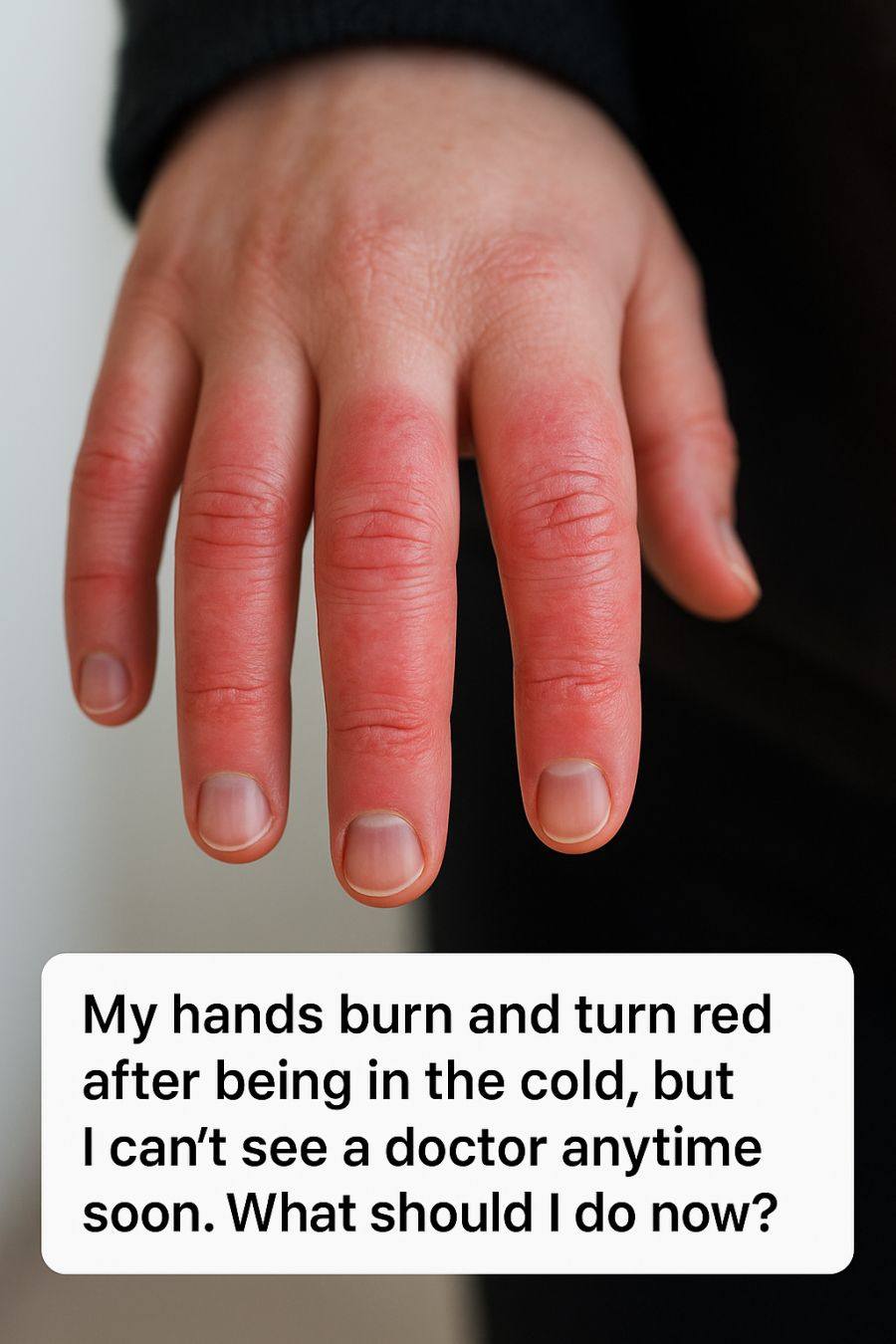
As winter approaches, many of us look forward to cozy evenings by the fire and the beauty of snow-covered landscapes. However, for some, cold weather also brings discomfort in the form of burning, red hands. It can be concerning, especially if you don’t have immediate access to medical care. Understanding why this happens and what you can do about it is crucial for your comfort and peace of mind.
When your hands burn and turn red after exposure to the cold, it can be both painful and worrisome. These symptoms might indicate a condition like chilblains, which is more common than you might think. This article will cover potential causes, immediate steps you can take to alleviate symptoms, and tips for preventing recurrence, all while you wait to see a healthcare professional.
1. First, Could This Be Chilblains (Pernio)?
Chilblains, also known as pernio, are small, itchy, red patches that appear on the skin after exposure to cold and damp conditions. They occur when the small blood vessels in the skin become inflamed due to rapid changes in temperature. This condition is more common in women and individuals with poor circulation. Chilblains typically affect the fingers, toes, ears, and face, but hands are often the first to show symptoms.
In addition to redness and burning, chilblains can cause swelling, blistering, and in some cases, skin ulcers. The size of the affected area can vary but typically measures between 1 to 3 centimeters. Although chilblains are uncomfortable, they usually improve within one to three weeks with proper care and without the need for medical intervention.
2. Red-Flag Symptoms: When It Really Can’t Wait for a Doctor
To see the full instructions for this recipe, go to the next page or click the open button (>) and don’t forget to share it with your friends on Facebook.
Continued on next page
