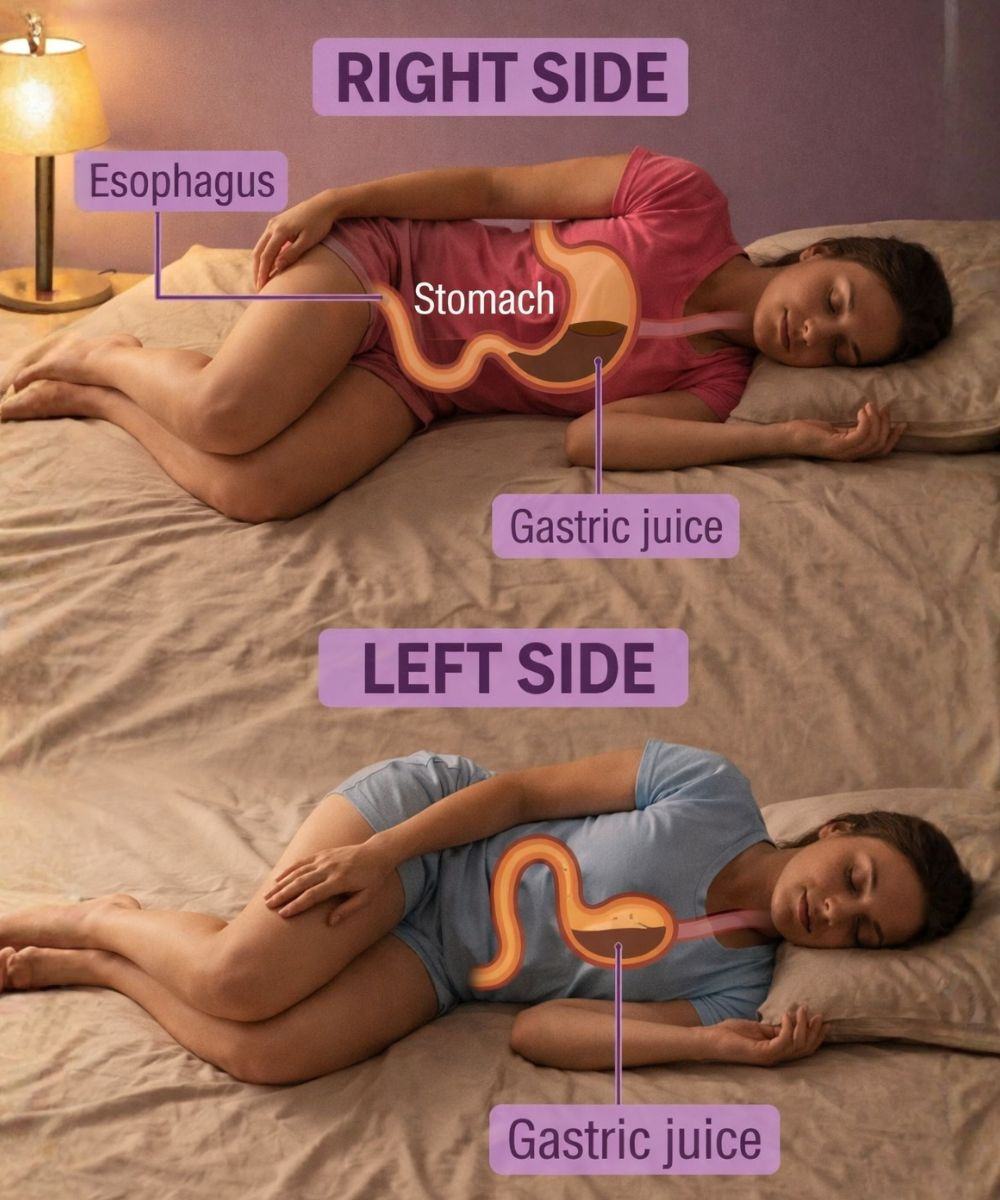
Snoring is one of those nighttime problems that seems simple but is actually influenced by many factors: anatomy, breathing patterns, sleep depth, allergies, weight, alcohol use, and—very importantly—sleep position. One of the most common questions people ask is whether sleeping on the right side helps or worsens snoring. The answer isn’t a simple yes or no, but science gives us some clear clues.
Why sleep position affects snoring
Snoring happens when airflow is partially blocked as you breathe during sleep. When muscles in the throat relax, the airway narrows. Air passing through causes the surrounding tissues to vibrate, producing the familiar snoring sound.
Your sleep position changes how gravity acts on these tissues. This is why sleeping on your back is strongly associated with louder and more frequent snoring: gravity pulls the tongue and soft palate backward, narrowing the airway. Side sleeping, in general, is usually better for keeping the airway more open.
But not all side sleeping is equal.
Sleeping on the right side: helpful or harmful?
Continued on next page
