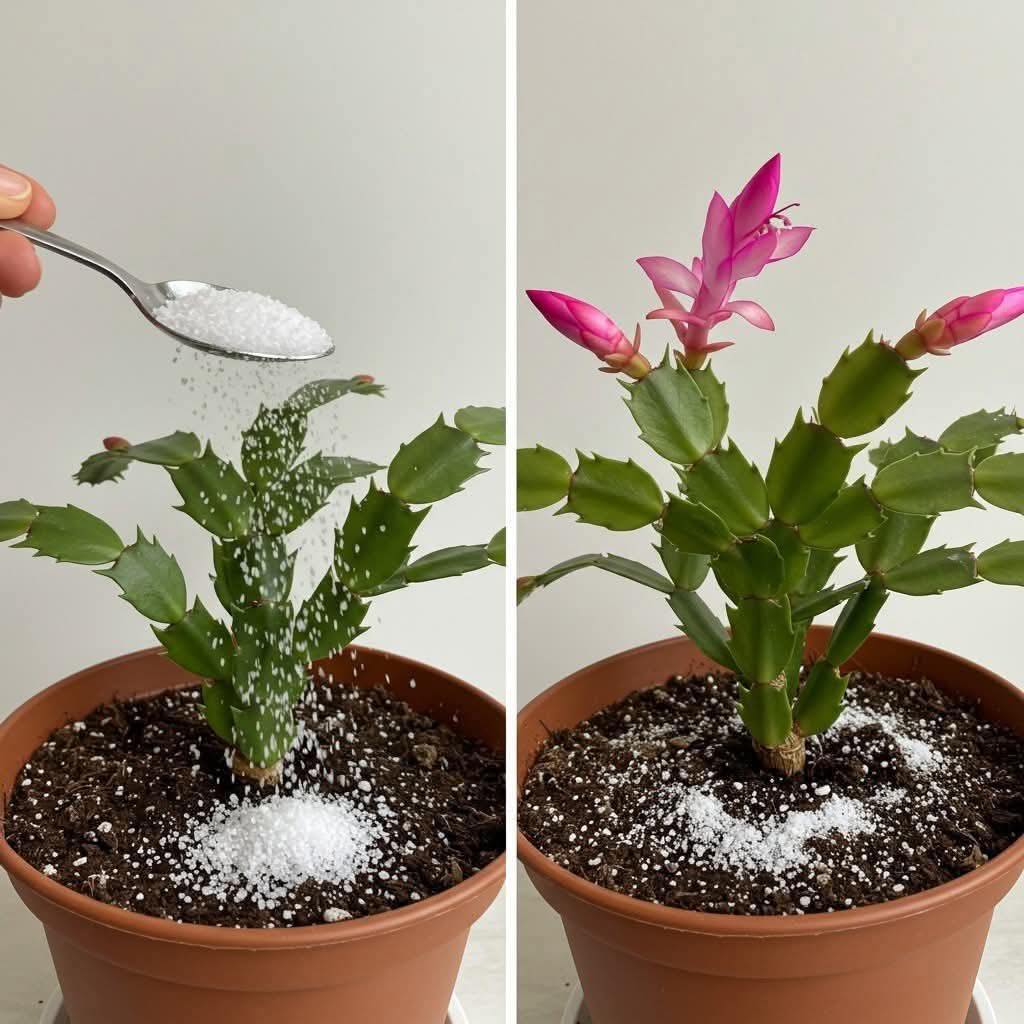
While Epsom salt is a powerful tool, combining it with proper seasonal care ensures the best results:
Adjust Light Exposure: As daylight diminishes, move plants closer to windows or provide supplemental grow lights. Even a few extra hours of light can make a significant difference in plant health.
Moderate Watering: Overwatering is a common problem in fall. Reduce watering frequency, allowing the soil to dry slightly between sessions.
Maintain Optimal Temperature: Most indoor flowers thrive between 65–75°F (18–24°C). Avoid placing them near cold drafts or heating vents that can stress the plant.
Prune Dead or Yellow Leaves: Removing damaged foliage encourages the plant to focus energy on healthy growth and potential flowering.
Check Humidity: Indoor heating can dry out the air. Mist plants lightly or use a humidity tray to maintain a healthy microenvironment.
Examples of Houseplants That Benefit Most from Epsom Salt
While many houseplants can benefit from magnesium supplementation, certain species respond particularly well:
Orchids: Known for their delicate blooms, orchids often struggle indoors during fall. Epsom salt boosts their flowering potential and keeps leaves vibrant.
Continued on next page
