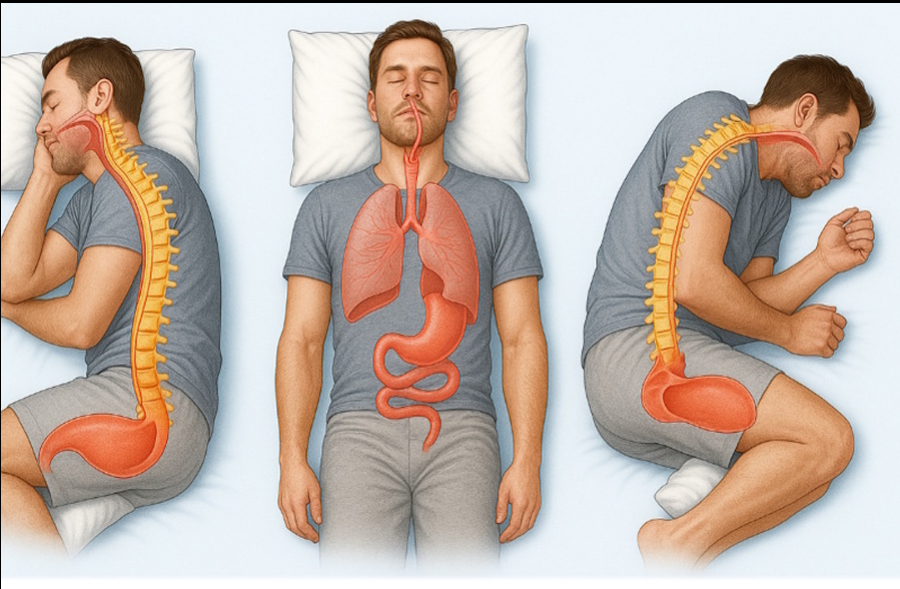
For children, sleeping on their back is recommended to reduce the risk of sudden infant death syndrome (SIDS) . For teenagers, this is an opportunity to establish good postural habits. But after age 60, sleep apnea becomes a real problem: avoid sleeping on your back !
Two testimonies that speak for themselves
Ekaterina, 34, suffered from heartburn after giving birth. Treatments only masked the symptoms. Simply switching sides while sleeping led to a noticeable improvement.
Anatoly, 57, woke up exhausted every morning. Diagnosed with sleep apnea, he opted for an orthopedic pillow and a lateral position. The result: his apneas decreased by 70%.
5 myths we urgently need to forget
- “Sleeping on your back is ideal” : Not for everyone!
- “In the stomach, it is good for digestion” : it is quite the opposite.
- “Ergonomic pillows don’t work” : A good pillow can transform your nights.
- “Snoring is just noise” – This is often a serious warning sign.
- “I’ll make up for it on the weekend” : Sleep can’t be stored!
Simple tips for a better night’s sleep
- Slide a pillow between your knees: perfect for relaxing your lower back.
- Slightly elevate the head of the bed to reduce reflux and make breathing easier.
- Try nasal strips if you often have a stuffy nose at night.
- Choose a mattress with balanced support to keep your spine properly aligned.
- And above all, sleep in the correct position, even if you move during the night!
