6. Expiration Dates, Storage, and Can Condition
Always review the expiration date before opening Spam. Although canned foods often remain edible past this date, it marks the period of best quality. Store cans in a cool, dry place, as heat and moisture can shorten shelf life.
Also check for dents, rust, swelling, or leaks. Damage to the can may compromise its seal, increasing the risk of contamination. If the can is damaged, do not consume its contents.
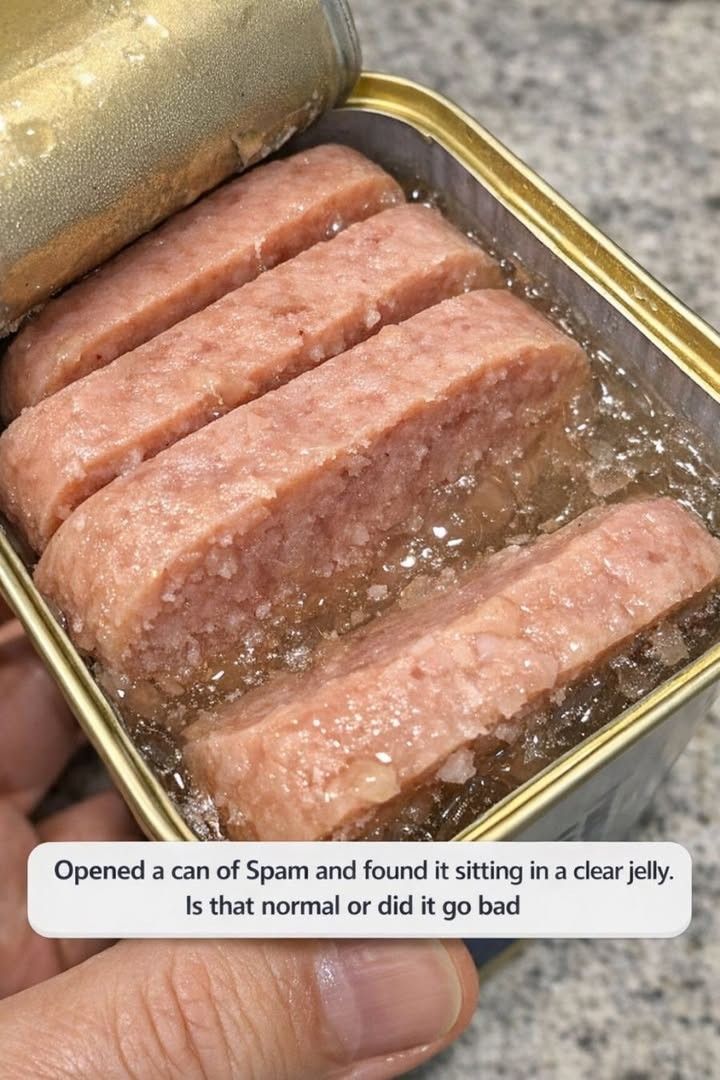
7. Is the Jelly Safe to Eat?
Yes, the jelly is safe and edible. It contributes moisture and flavor to the meat. However, if the texture isn’t appealing, it can be removed before cooking.
When heated, the gelatin melts and blends into the dish. If you prefer to remove it, rinsing the Spam briefly under warm water or wiping it off with a paper towel is sufficient.
8. Preparing Spam With or Without Jelly
To remove the jelly, simply rinse the Spam under warm water for a few seconds. This is especially useful if you plan to cook it further.
Spam works well in many cooking methods—frying, grilling, baking, or sautéing. During cooking, the jelly dissolves naturally and can even help create a crisp, caramelized exterior when fried.
9. Storing Leftovers Safely
After opening a can, any unused Spam should be placed in an airtight container and refrigerated. It’s best eaten within 3–5 days. If you notice unusual odors or texture changes during storage, discard it.
For longer storage, Spam can be frozen. Slice or portion it, wrap it tightly, and store it in freezer-safe containers. Properly frozen Spam can last up to three months.
Continued on next page
