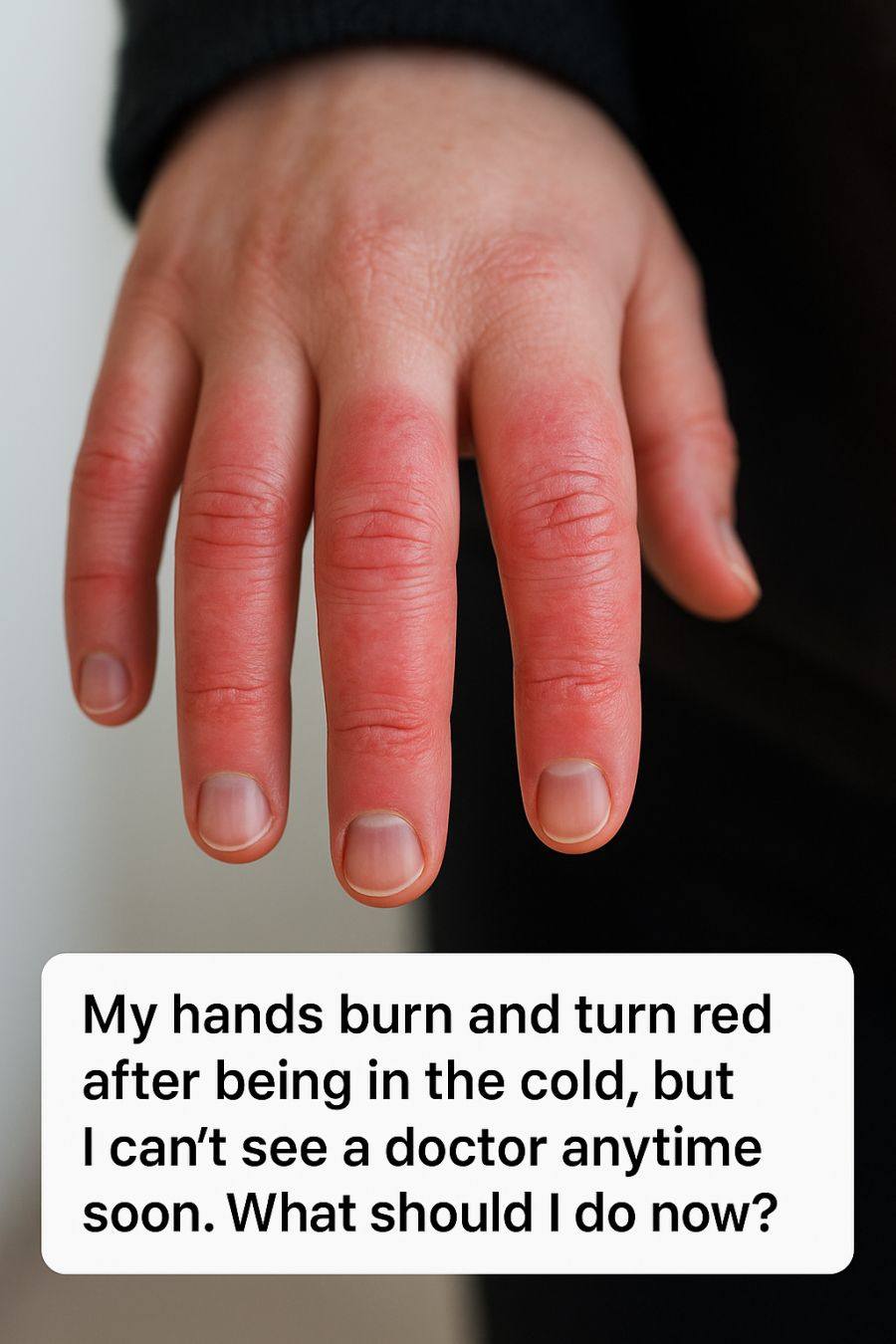
My hands burn and turn red after being in the cold, but I can’t see a doctor anytime soon. What should I do now?
To ease pain and itching associated with chilblains, try natural remedies like aloe vera gel, which has anti-inflammatory properties. Apply it gently to affected areas to soothe irritation.
Another option is applying a paste made from baking soda and water, which can help reduce itching. Oatmeal baths are also known for their soothing effects on irritated skin. Soak your hands in a basin with warm water and colloidal oatmeal for 10-15 minutes to relieve discomfort.
10. How to Monitor Your Symptoms Until You Can See a Doctor
Keeping track of your symptoms can be helpful until you can see a healthcare professional. Note any changes in the size, color, or pain level of affected areas daily. Take photographs to document progress, as this can be useful information for your doctor.
If you notice any worsening of symptoms or new developments like blisters or ulcers, prioritize seeking medical attention. Use a diary to record any triggers, such as specific weather conditions or activities, that seem to exacerbate your symptoms.
11. When to Use Telehealth, Pharmacies, and Nurse Lines for Extra Help
Telehealth services can be a valuable resource when you can’t see a doctor in person. Many healthcare providers offer virtual consultations where you can discuss your symptoms and receive advice on managing them. Pharmacies often have knowledgeable staff who can recommend over-the-counter treatments and preventative measures.
Nurse lines, typically available through healthcare plans or local clinics, can provide guidance on whether your symptoms require immediate attention or can be managed at home. They can also offer advice on symptom management and home care tips.
12. Long-Term Prevention: Keeping Chilblains From Coming Back Next Winter
Preventing chilblains in the long term involves a combination of lifestyle changes and proactive measures. Ensure that you dress appropriately for the weather, with adequate layers and protective gear. Avoid rapid temperature changes by gradually acclimating to indoor temperatures after being outside.
Regular exercise can improve circulation, reducing the likelihood of chilblains. Additionally, maintaining a healthy diet and staying hydrated supports skin health and resilience. Consider consulting a healthcare provider for advice on supplements or medications that might help prevent chilblains, especially if you are prone to them.
