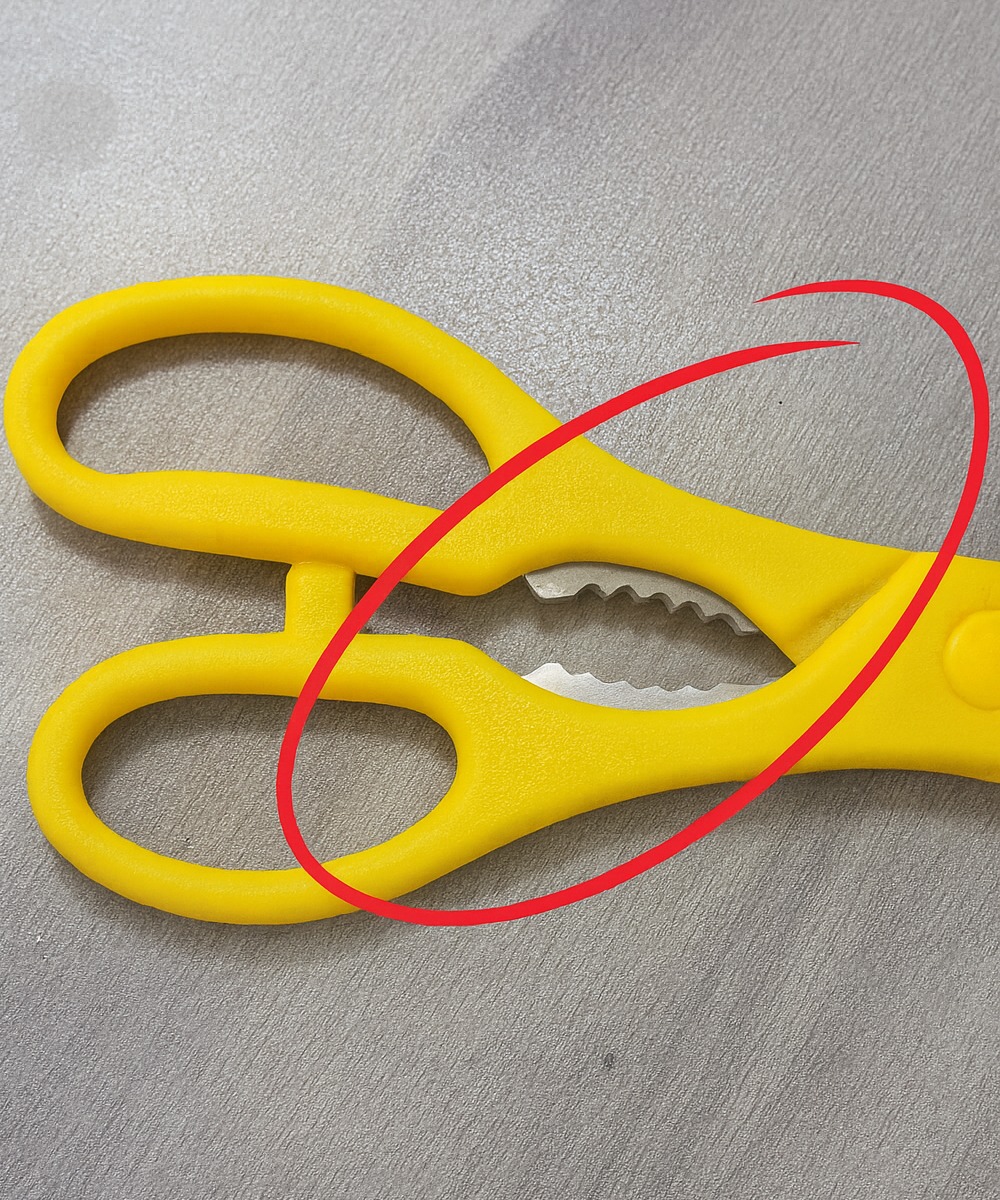
No nutcracker in the house? No problem. This serrated handle can help crack walnuts, pecans, hazelnuts, and more.
Here’s how:
Place the nut in the grooved slot.
Press the handles gently until the shell cracks.
Rotate the nut and repeat until the shell loosens.
The key is patience—don’t squeeze too hard. The goal is to break the shell, not crush the nut inside. It may not be as fancy as a proper nutcracker, but it gets the job done when you need it.
Tip #3: Break Small Poultry Bones
If your scissors are heavy-duty (like poultry shears), the ridged part can help grip and break small chicken bones, such as wings, thighs, or drumsticks.
Just hold the bone in the serrated area, apply steady pressure, and let the grooves prevent slipping. Be sure to use a strong pair—lightweight scissors may not handle this task.
Bonus Uses You Might Not Know
This little notch can help in many other ways:
Crack crab legs or lobster shells for seafood dishes.
Open tough plastic caps on juice or milk containers.
Loosen synthetic bottle caps in a pinch.
Hold twist ties or plastic seals securely so you can cut them neatly.
Basically, if something is slippery, tough, or hard to grip, this feature can lend a hand.
Why Do Manufacturers Add It?
Continued on next page
