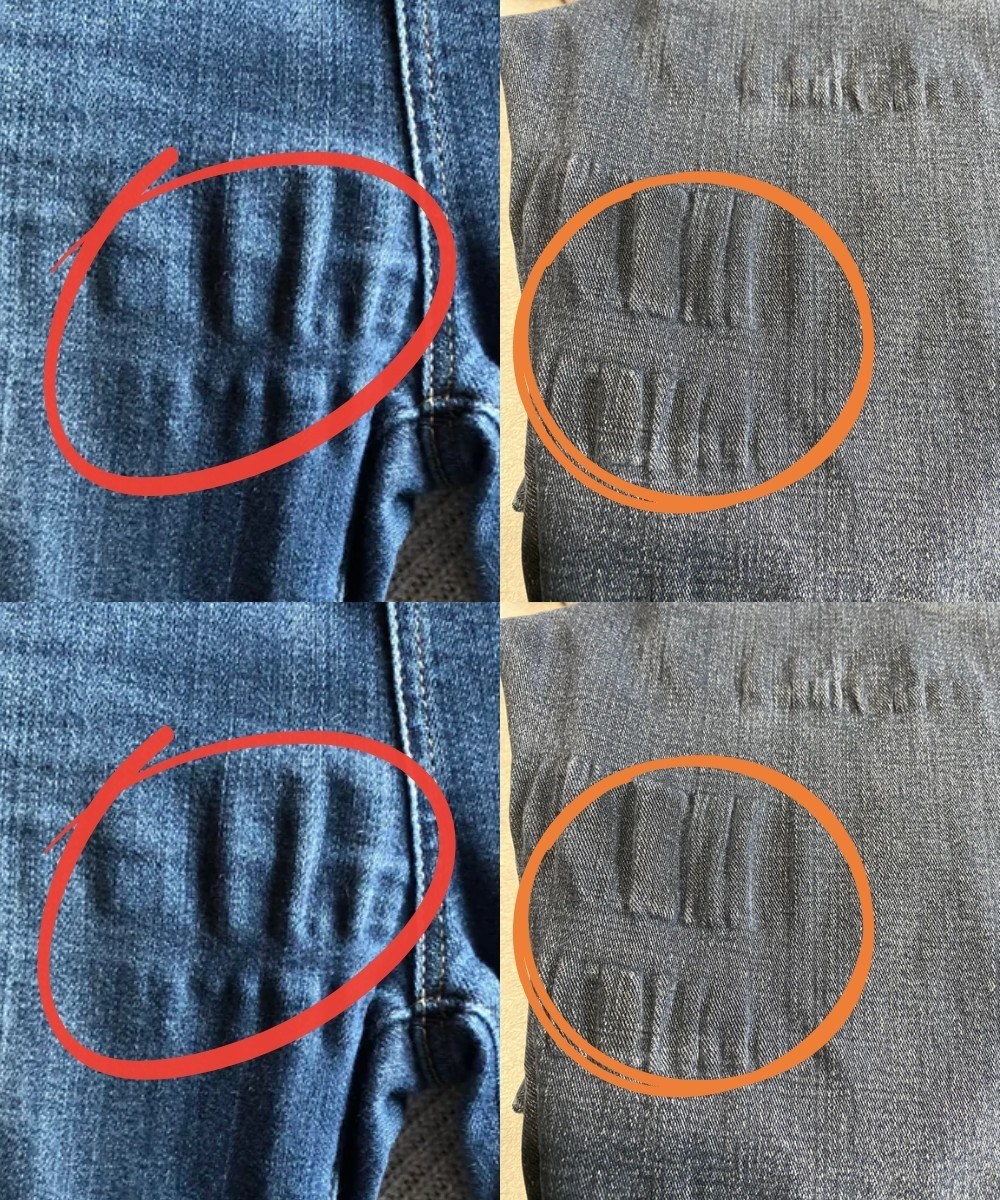
Another factor lies in how the jeans are constructed. During manufacturing, denim is cut, stitched, and assembled under varying amounts of tension. While everything might look smooth when brand new, washing can release that tension, causing the fabric to pull and distort, which creates ripples.
Jeans that are made quickly or with less attention to detail — including some budget options — are more likely to show these effects. But even pricier jeans can be affected, especially if they use stretch fabrics or have inconsistent stitching.
3. Stretch Denim and Fiber Behavior:
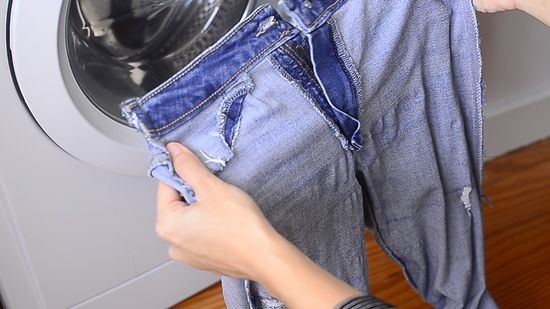
To add comfort and flexibility, many jeans today include elastane (spandex). While stretch denim feels great to wear, it behaves differently in the wash. Over time, repeated washing can lead to ripples as the elastane fibers shrink or lose their shape differently than the cotton.
This is most common in jeggings or thinner stretch jeans, where the synthetic fibers dominate. With every wash and dry cycle, the differences in fiber response become more pronounced.
4. Overloading the Washing Machine:
Stuffing too many clothes into the washer can also lead to rippling. If the jeans don’t have space to move, they twist and bunch, causing uneven agitation. This tension results in wrinkles and wave patterns, especially if the jeans wrap around bulkier items like hoodies or towels.
