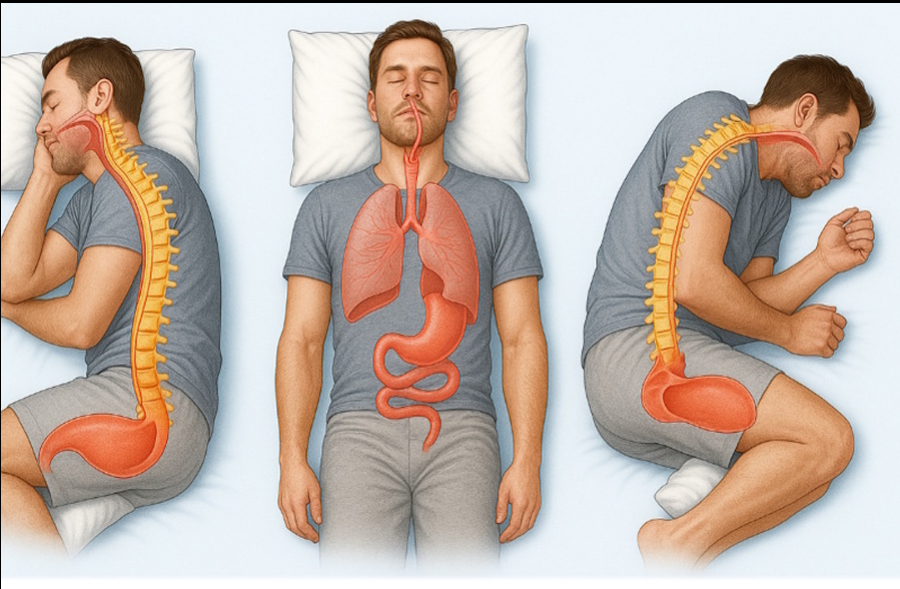
Every night we go to bed hoping for a restful, restorative sleep. On our back, on our side, curled up, or lying on our stomach—everyone has their own little routine. But have you ever considered that your sleeping style could be the cause of your painful awakenings, your restless nights, or your persistent tiredness upon waking? What if, without any apparent pain, you were imposing insidious restrictions on your body, night after night?
The warning signs we ignore
Loud snoring, headaches upon waking, a feeling of shortness of breath, heartburn, or even morning exhaustion despite having slept eight hours… These symptoms, which are often attributed to stress or an unsuitable bed base , can be caused by a simple mistake: poor posture at night.
Because yes, sleep isn’t just about resting: it’s also a period during which our body continues to work intensively to repair and regenerate itself. If it’s set up incorrectly, this mechanism is disrupted, sometimes permanently.
Why sleeping on your right side changes everything

Sleeping on your left side isn’t just a yogi’s quirk. This position is a real health asset. It promotes better digestion, reduces acid reflux, improves lymphatic circulation, and is highly recommended for pregnant women to optimize blood flow to the baby.
But that’s not all. Studies show that sleeping on your side stimulates a little-known but crucial process: brain cleansing by the glymphatic system, which could reduce the risk of neurodegenerative diseases like Alzheimer’s.
